Our History
Roll back the clock and learn about the legacy of rail travel in the Black Hills, South Dakota.
History You Can Ride
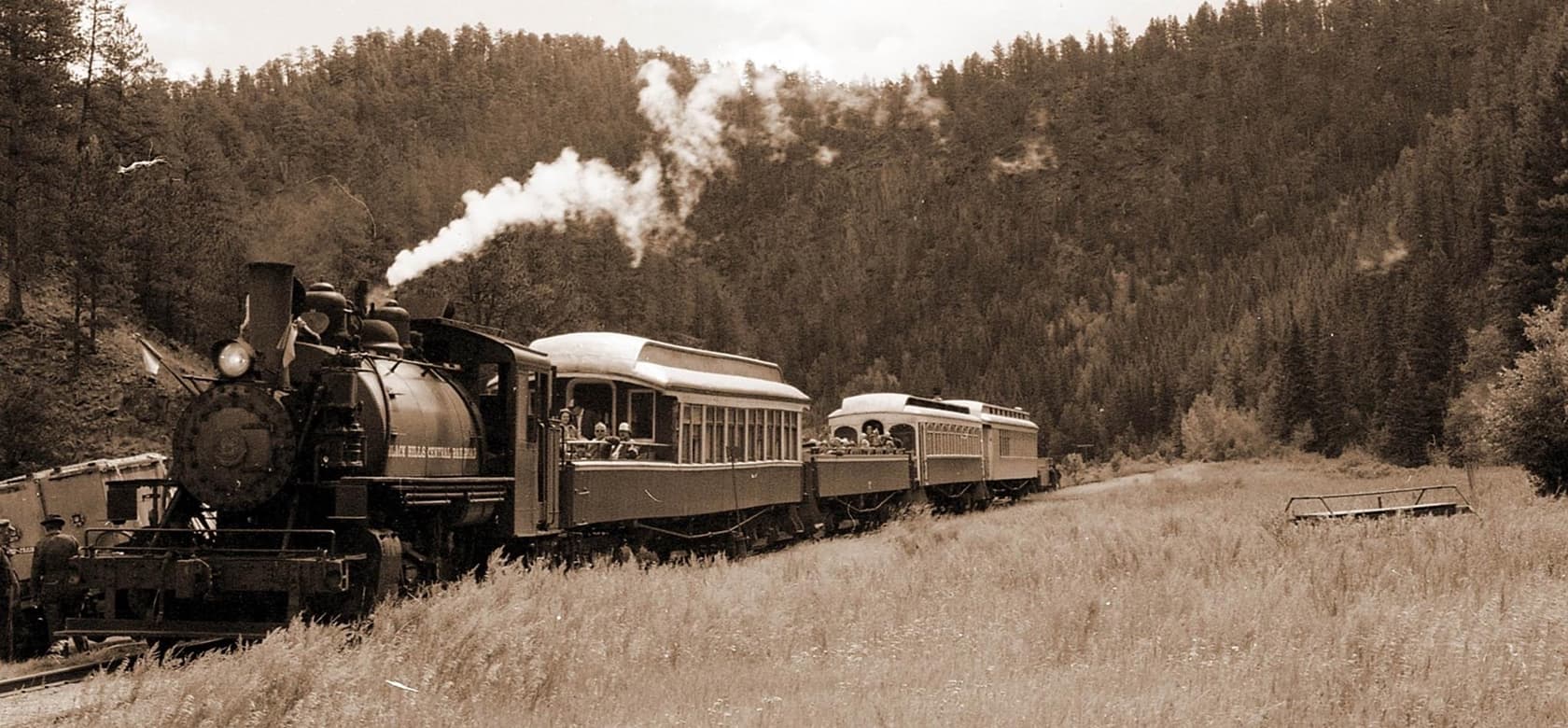
Launched in 1957, the 1880 Train is the oldest continuously operating standard-gauge excursion train in the world. With historically accurate restorations of rich hardwood interiors, stained glass and leather seats, the train has offered a vintage steam experience to hundreds of thousands of tourists who come to visit Mount Rushmore annually. We invite you to learn more about us!

Get the Guide Book
The official 1880 Train Guide Book is your ticket to the history, equipment and operations of the Black Hills Central Railroad. Available at our gift shops in Hill City and Keystone, or as an add-on when purchasing tickets online.
Timeline
The Movie Era and the 1972 Flood
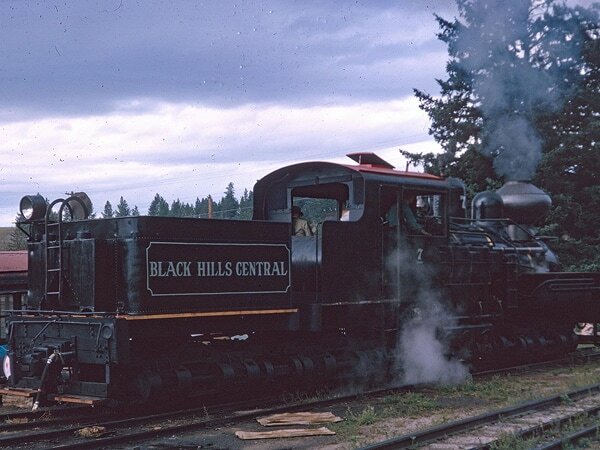
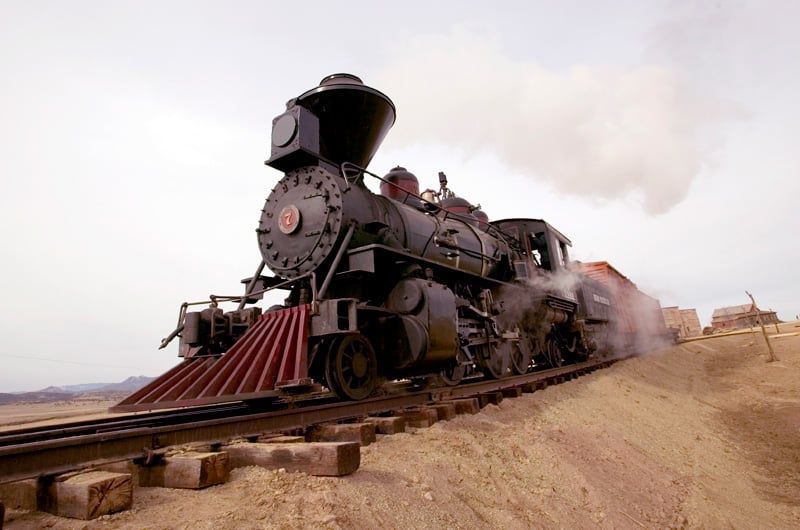
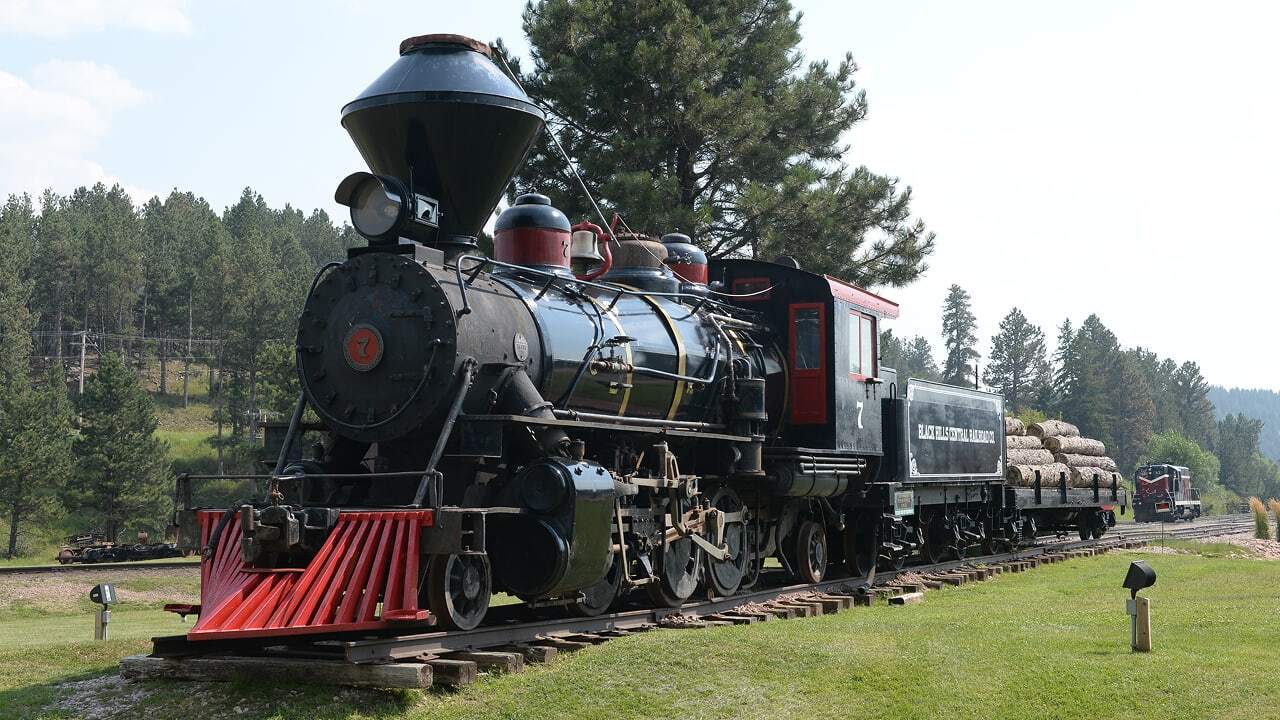
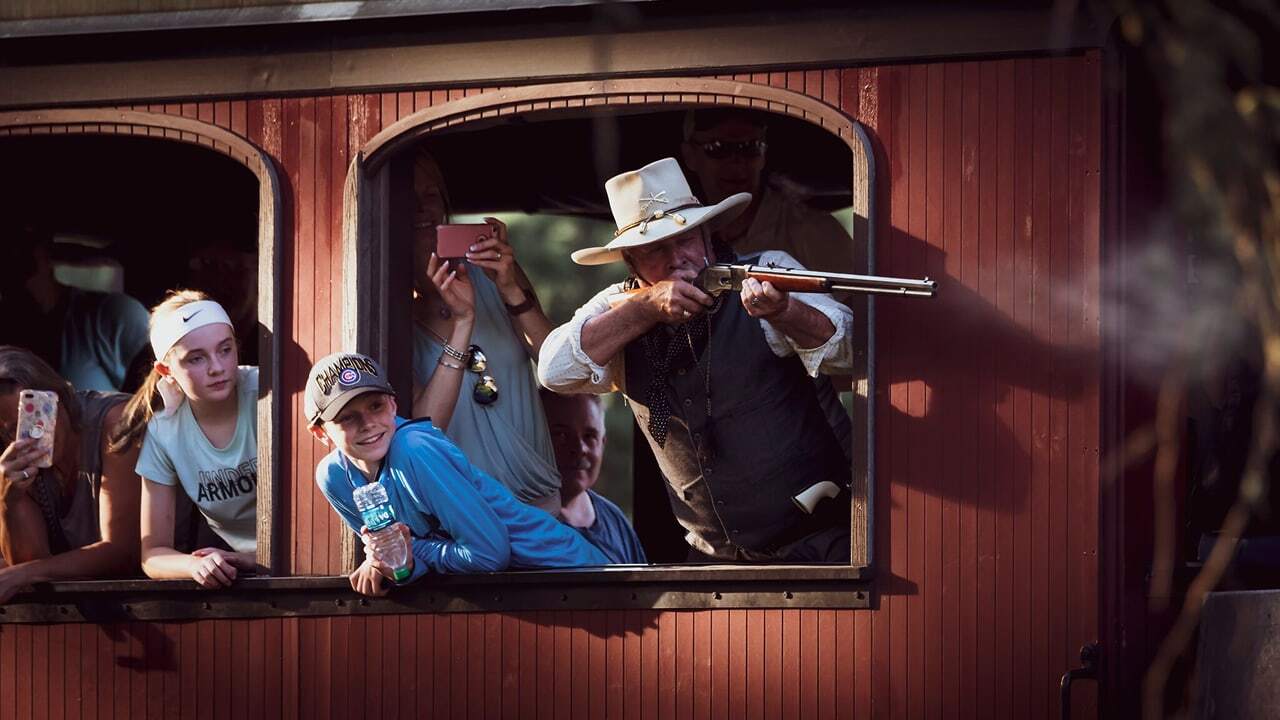
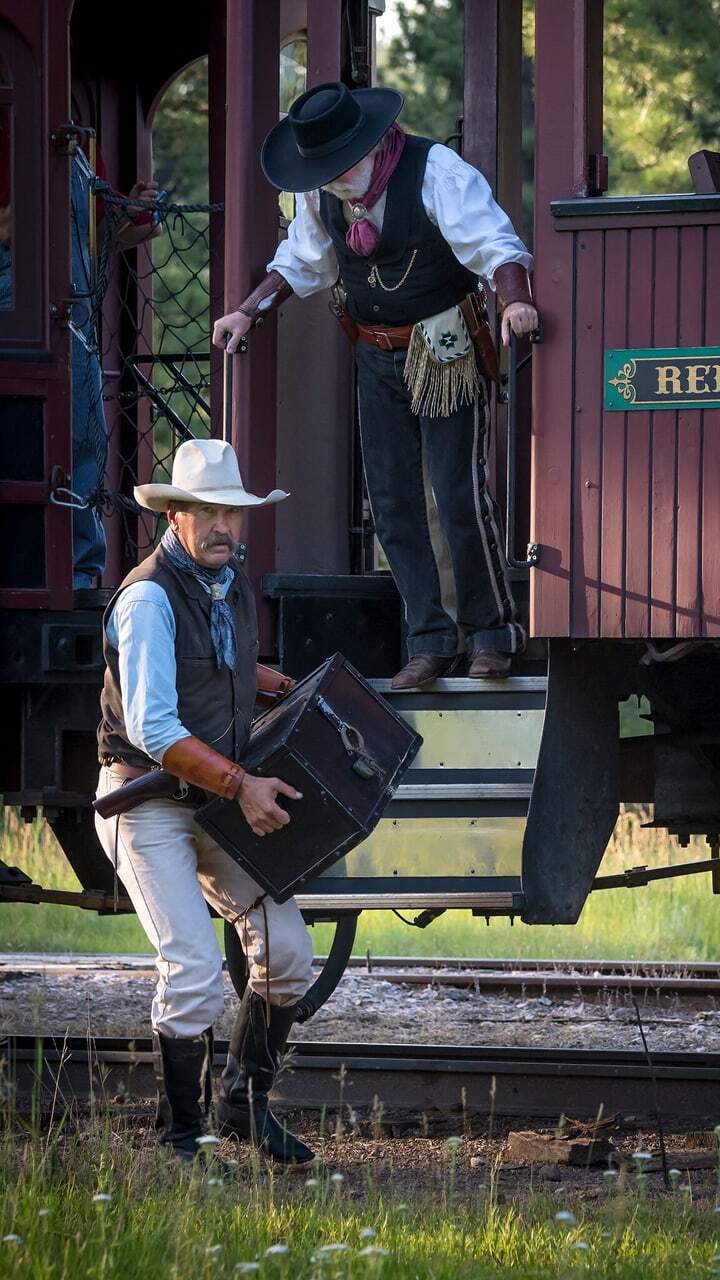
By the late 1960s a diverse collection of locomotives, passenger cars, and various other railroad equipment operated on the Black Hills Central. Hollywood took notice and the 1880 Train featured in numerous movies and TV shows. Some of equipment took on bright colors, and locomotives, such as #7, gained historically inaccurate headlights, smokestacks, and other “Hollywood” enhancements, still present today.
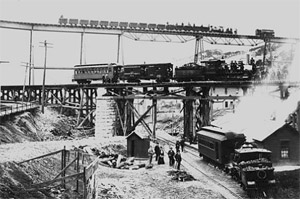
On June 9, 1972 devastating floods struck the Black Hills, washing out multiple bridges over Battle Creek and destroying much of the rail. The Burlington's successor, Burlington Northern, chose not to rebuild the line into Keystone, forcing the 1880 Train to operate out of a siding about a mile out of town.
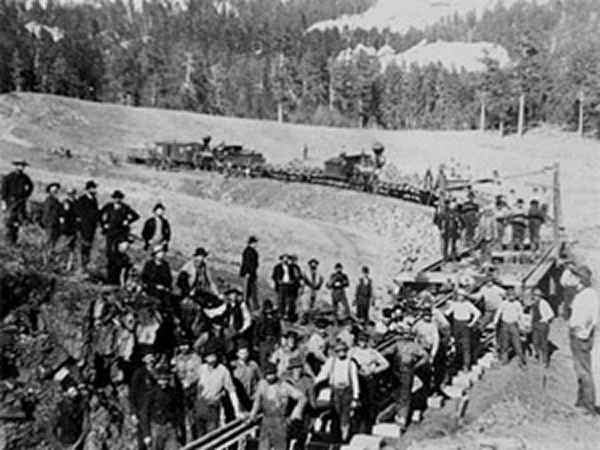
By the mid-1980s, Black Hills freight rail traffic declined to the point that the line from Edgemont to Deadwood was abandoned by the then Burlington Northern Railroad and the rails were pulled up to create an ambitious Rails-to-Trails project for hikers and bicyclists. However, the Black Hills Central was able to secure rights to and preserve the Hill City to Keystone branch for continued steam railroad excursions. The end of Burlington Northern freight rail service to Hill City in the late 1980s left the remaining ten miles of Black Hills Central trackage permanently orphaned and the only remnant out of some 400 original miles of Black Hills trackage in its heyday.
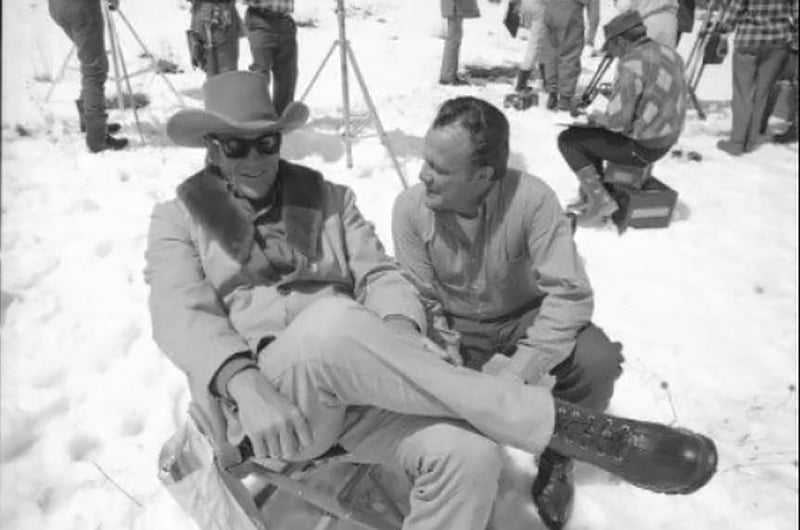
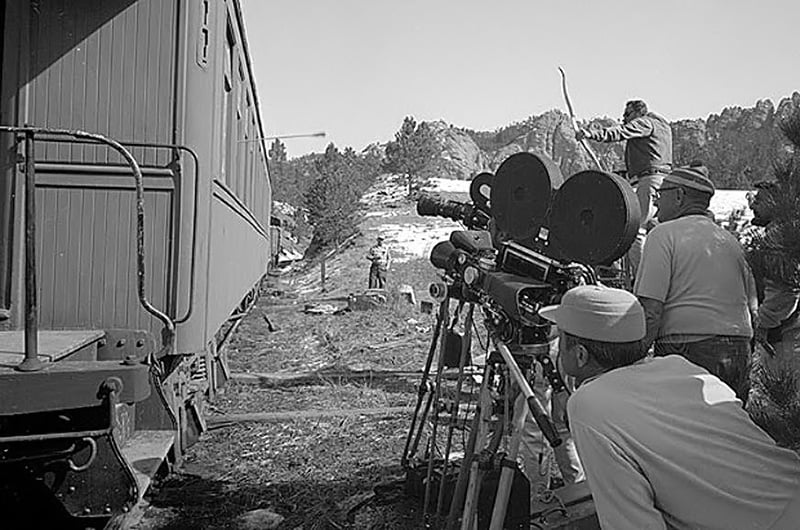


Photo Gallery
.jpg?width=400&height=266&name=Oreville%20(1).jpg)


Rolling Stock
Learn more about the train cars at 1880 Train.
Number Seven is the longtime face of the 1880 Train. Built in 1919, this 2-6-2 steam engine was sold to the Prescott and Northwestern in Northern Arkansas in 1938 and was acquired by the Black Hills Central in 1962. The locomotive's features have been altered from its original builders photo, primarily due to its appearance in a number of Hollywood productions through the years. Sharp-eyed fans of the 1880 Train will spot #7 in episodes of “Gunsmoke,” CBS's production of “Orphan Train,” and the Steven Spielberg 2005 mini-series “Into the West.” Today, #7 proudly overlooks the community of Hill City on static display.
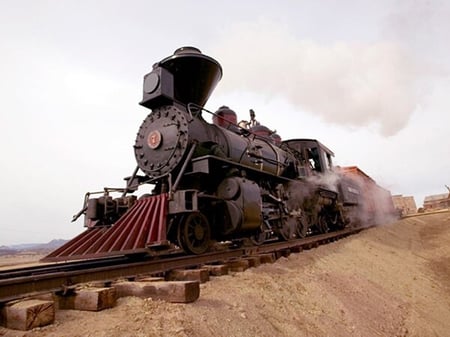
Number 104 is a 2-6-2T tank engine that was built by Baldwin Locomotive Works in 1926 for the Silver Falls Timber Company and the Peninsula Terminal Railroads in Oregon. The Black Hills Central acquired #104 and its twin number #103 (built in 1922) in 1965. Number 103 is still stored at the Hill City property, but many of its critical parts have been used over the years to keep its twin, 104, in continuous service since 1965. Number 104 is maintained in full operational status, but is rarely used because of its smaller pulling capacity.
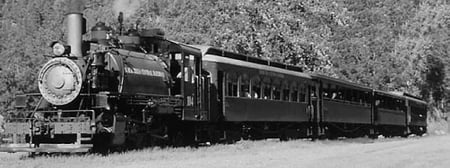
This is a 2-6-6-2T articulated Mallet (pronounced “Ma-lay”) built by the Baldwin Locomotive Works in 1928 for the Weyerhaeuser Timber Company of Vail, WA. Its next stop was the Rayonier Lumber Company where it received a tender from Rayonier #101 and was retired in 1968. This locomotive was later displayed at the Wasatch Mountain Railway in Heber City, Utah, and then sold to the Nevada State Railway Museum.
The Black Hills Central Railroad acquired #110 in 1999 and trucked the locomotive from Nevada to South Dakota on four semi-trailers. A three-year restoration followed, which returned this locomotive to operational service in the spring of 2001. The restoration of locomotive #110 made it the first of its design in the world to be returned to steam since the 1950s.
The acquisition and restoration of locomotive #110 facilitated the goal of increasing daily passenger capacity to meet the growing demand in the late 1990s. The large Mallet locomotive was chosen because it can pull a full train of seven passenger cars over our steep grades, up from the four cars handled by our smaller locomotives. The articulated frame of locomotive #110 allows it to navigate the sharp mountain curves and the compound cylinder design uses the same amount of steam twice, producing more tractive effort more efficiently than a pair of our smaller locomotives.
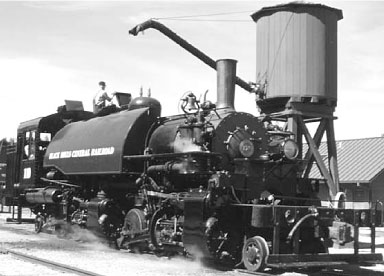
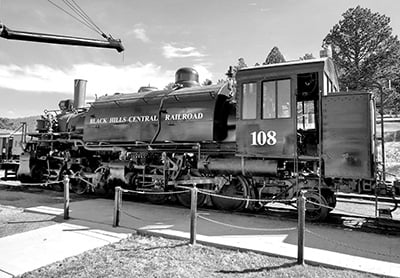
Locomotive #108 joined its nearly identical twin, #110, at the beginning of the 2020 season following a four-year restoration. This 2-6-6-2T articulated tank engine was built by the Baldwin Locomotives Works in 1926 for the Potlatch Lumber Company. It later made its way to Weyerhaeuser Timber Company and eventually to the Northwest Railway Museum in Snoqualmie, Washington. The purchase and restoration of #108 complimented the growth initiated in the 1990s under the Warder Family leadership.
At first glance, #108 and #110 appear to be identical twins but they do have a few distinct visual differences. The most significant cue is the large blue water tank the fireman fills from the water tower prior to each departure. #108 has a full saddle tank which completely covers the boiler, while the tank on #110 is split into two halves with a slight gap at the top. The difference is subtle, but #108's tank is slightly narrower than #110, providing the engineer a slightly better forward view. While both locomotives share near identical designs, their crews tell us they each have their own unique personalities and challenges to operate. The design is named for Anatole Mallet, who created it in the 1870s to conquer the mountains of his native Switzerland.
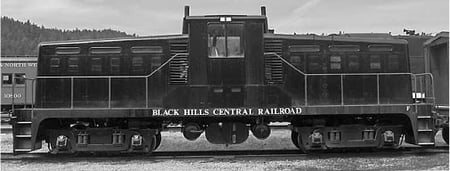
Locomotive # 1 is a 1940-vintage Whitcomb diesel-electric locomotive. This engine was built for the Department of Defense and was operated in Washington State during World War II. It was then purchased for switching at the Black Hills Power and Light coal-fired generating plant near Lead, SD. The #1 was acquired in 1983 and is used for switching duties on the Black Hills Central.
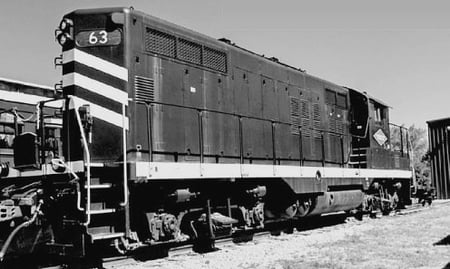
Locomotive # 63 is a GP9 model diesel-electric built by the Electro-Motive Division of General Motors for the Chesapeake and Ohio Railroad as #6178 in November of 1956 (builder number 22561). The unit was renumbered to #63 when purchased by the Indiana and Ohio Railroad and retained that same number during subsequent sales to the Northeast Kansas and Missouri Railroad, Chillicothe-Brunswick Railroad and Progressive Rail, Incorporated.
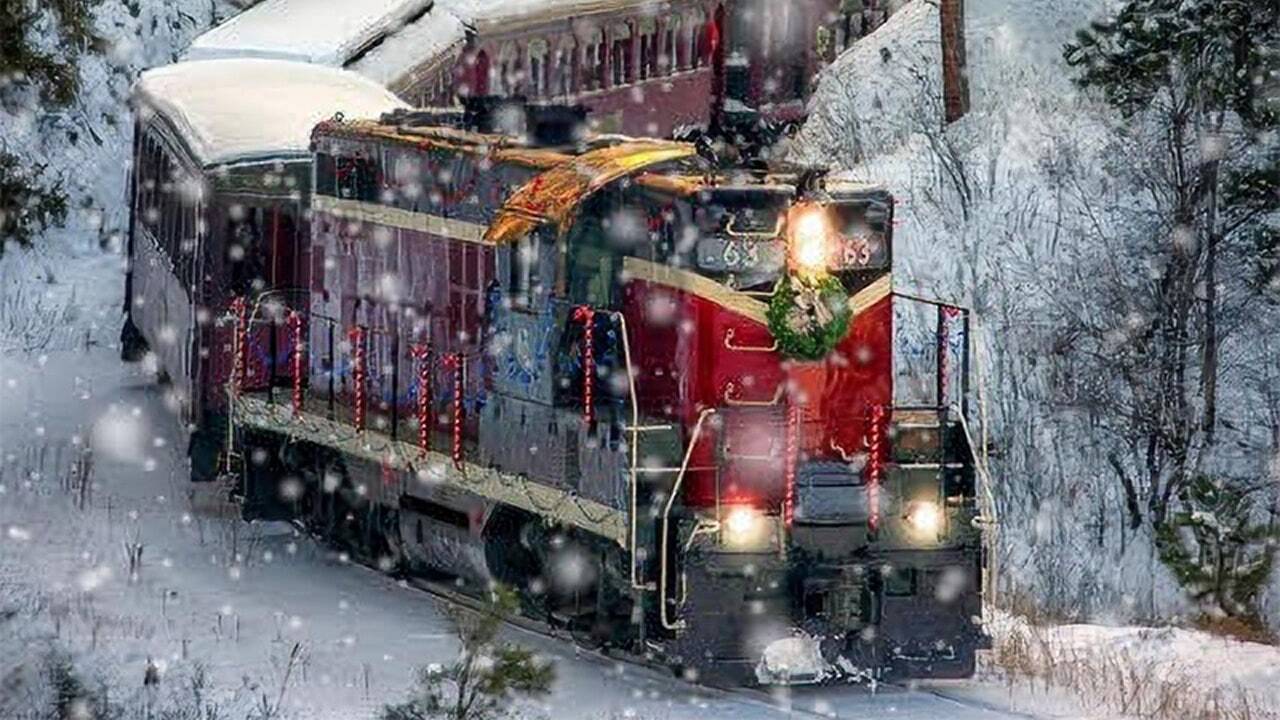
Locomotive #63 now sports a distinctive crimson and black paint scheme and proudly leads all our wintertime Holiday Express train departures. #63 also serves as the reserve locomotive in summertime in the event of a mechanical issue on our steam locomotives.
EDWARD GILLETTE was originally a combine car used on the Oregon Electric Railway. Car #65 has been at the 1880 Train since it was purchased in the 1970s. It was restored to its original glory in 2009, and accommodates 48 passengers with style. The car features several hardwoods throughout its interior along with stained and frosted glass windows and upholstered seats.
The coach is the namesake of Edward Gillette, the engineer and surveyor who laid out the original High Line route running north and south through the heart of the Black Hills from Edgemont to Deadwood.
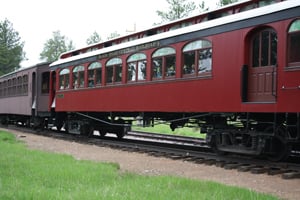
OREVILLE, KEYSTONE, & ADDIE CAMP were originally interurban passenger equipment built by the American Car Company for the Oregon Electric Railway in 1913. Some of the equipment from this series was, in turn, sold to the Pacific Great Eastern Railway in British Columbia, Canada, where they were used until the mid-1960s. The Black Hills Central purchased #112, #125, #133, #140, #144 and several other cars in the early 1970s.
These passenger cars are the mainstay of the Black Hills Central Railroad, with interiors richly restored to their more than hundred-year-old glory. OREVILLE, named for a former mining camp south of Hill City, was completely restored by the Black Hills Central staff in 1997 and serves as the location of our onboard narration host. KEYSTONE, named for our eastern terminal, was returned to service after its complete restoration in 2004.
ADDIE CAMP, #133, named after a mining community along our route, is now with us only in memory. Long a workhorse on our line, ADDIE CAMP now serves as a railroad-themed restaurant in Soldotna, Alaska and still proudly bears her Black Hills Central Railroad markings. To take a look, visit www.whistlehillsoldotna.com/
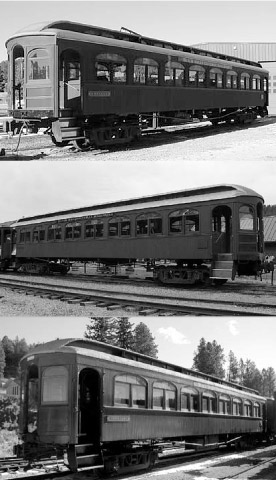
Coach #144 REDFERN was originally built as a baggage car. The Oregon Electric Railway converted it to a passenger coach in 1915, and Black Hills Central modified it for use as an open-air observation car in 1998. Built in the same manner as MYSTIC, these open observation cars provide a great view of the Black Hills scenery while still providing the protection of a roof. Redfern, located just north of Hill City, once served industry and small mines along the main Highline railroad to Deadwood.
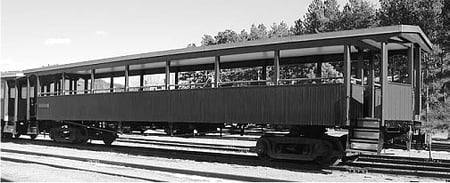
A former Oregon Electric Railway passenger coach, MYSTIC was rebuilt into an open-air observation car in 1999. The car's appearance and simple roof construction are much like the ones used by the Rapid City, Black Hills and Western Railroad, AKA “The Crouch Line,” in the 1920s for summer excursions between Rapid City and its namesake town of Mystic. A small outpost that served local mines and industry, Mystic still exists north of Hill City, nestled along the former High Line right of way in the central Black Hills.
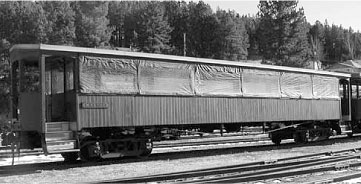
Coach #91 ROCHFORD's conversion is an example of the fine workmanship here at the Black Hills Central Railroad. Originally used to carry ice and water for track crews, its thick walls make for a comfortable experience for 48 passengers in colder weather. The car is named for the northern Black Hills mining town of Rochford (pronounced: “Roch-Ford” not “Roach-Ford”) located on the former High Line to Deadwood.
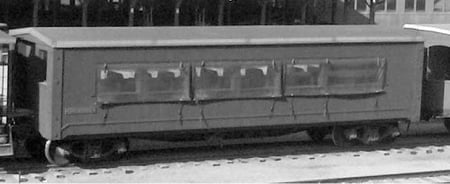
Please take a moment to admire the craftsmanship and detail of HARNEY CANYON. It was a former Chicago, Burlington and Quincy wooden caboose, but very little was salvageable when the crew disassembled the car in 2006. It was then rebuilt to look much like the railroad's other former interurban coaches with a pleasing combination of pine, poplar, and oak.
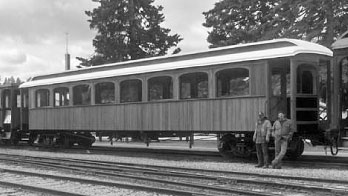
New on the rails in 2006, the Coach BLUE BIRD began life as a Chicago, Burlington and Quincy flatcar. The Black Hill Central's car shop crew transformed the bare frame into a comfortable 48-seat coach with a pine structure and an attractive knotty pine interior—woods representative of the Black Hills forests. Blue Bird is designed with accommodations for those needing assistance boarding or wheelchair seating. A wheelchair lift is located at one end, with designated seating for those who need to ride in their wheelchairs.
The Blue Bird Mill was located along Battle Creek on the edge of Keystone, serving the area's mines. Only a small portion of the mill's foundation still exists, but is briefly visible across Battle Creek as the train departs Keystone.
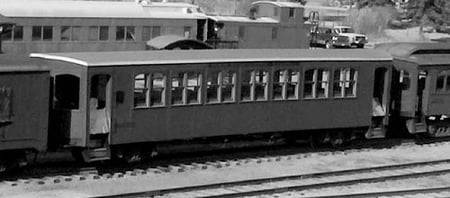
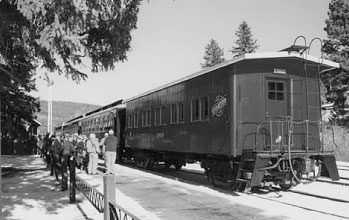
Coach #10800 HILYO is one of the most interesting cars on the Black Hills Central. Restored in 1998, it was originally built as a Drovers Waycar for the Chicago and North Western Railway, this restored car is one of only two still remaining in the United States. While this car looks similar to a caboose (waycar), it is not one. The word “drovers” refers to cattle drivers. A Drovers Waycar was placed in the train make-up ahead of the regular caboose to serve as a passenger and bunk car for hands and stockmen accompanying their cattle during shipment to market. Hilyo was the original name of Hill City.
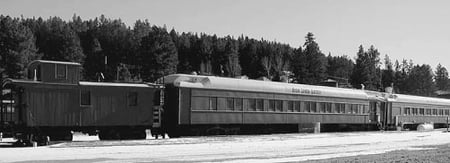
The HIGH-LINER EATERY, our trackside Hill City restaurant, is housed in a pair of heavyweight Pullman passenger cars originally constructed in the 1940s as hospital cars. They still retain their distinctive Pullman appearance but sport a white roof, unique to hospital cars transporting injured troops in World War II and Korea. They were acquired from the Igloo Army Depot near Edgemont, SD and have been at the Black Hills Central since the 1960s. The Burlington Northern caboose #10866 coupled to the north of the High-Liner cars was originally a Northern Pacific Railroad caboose built in 1906. The “High Line” was the original railroad running from Nebraska through Hill City to Deadwood.
Discover the Crew
Learn about the important jobs powering our trains.
Engineer
On duty in the cab for the entire route, the engineer controls the speed and operation of the locomotive, and watches the track ahead for dangers or obstructions. It's not just a matter of blowing the whistle: the job requires familiarity with the route, knowing how fast or slow the train needs to be going and how much traction is required at any given point.
.svg)
Fireman
Also on duty in the cab for the entire route, the fireman monitors the amount of fuel and water the locomotive is using. In the 1880 Train, which burns recycled motor oil, the fireman uses an injector to add fuel to the fire, while the amount of water in the boiler is viewed using the water glass. The fireman must constantly monitor both the steam pressure of the engine as well as the water level in the water glass and make sure that there is enough steam for the engineer to use while climbing hills. The fireman also helps the engineer watch the train and the track ahead.
.svg)
Conductor
The conductor is in charge of everyone and everything on the train. The conductor remains onboard the train cars during the train ride, collecting tickets, assisting passengers, and monitoring the engine and train cars to make sure everything is operating correctly. The conductor also works with the engine crew to conduct running brake tests en route, as well as connecting the engine to the train cars in station.
.svg)
Brakeman
The brakeman also remains onboard the train during the train ride to assist passengers and monitor the train cars and the function of the brake mechanism. While in station, the brakeman sets and releases the hand brake on the train cars and assists with the boarding process and concessions.
.svg)
Hosts
The hosts are on board the train to assist passengers and provide narration during the train ride. Hosts also assist with boarding and de-boarding the train.
.svg)
High-Liner Eatery
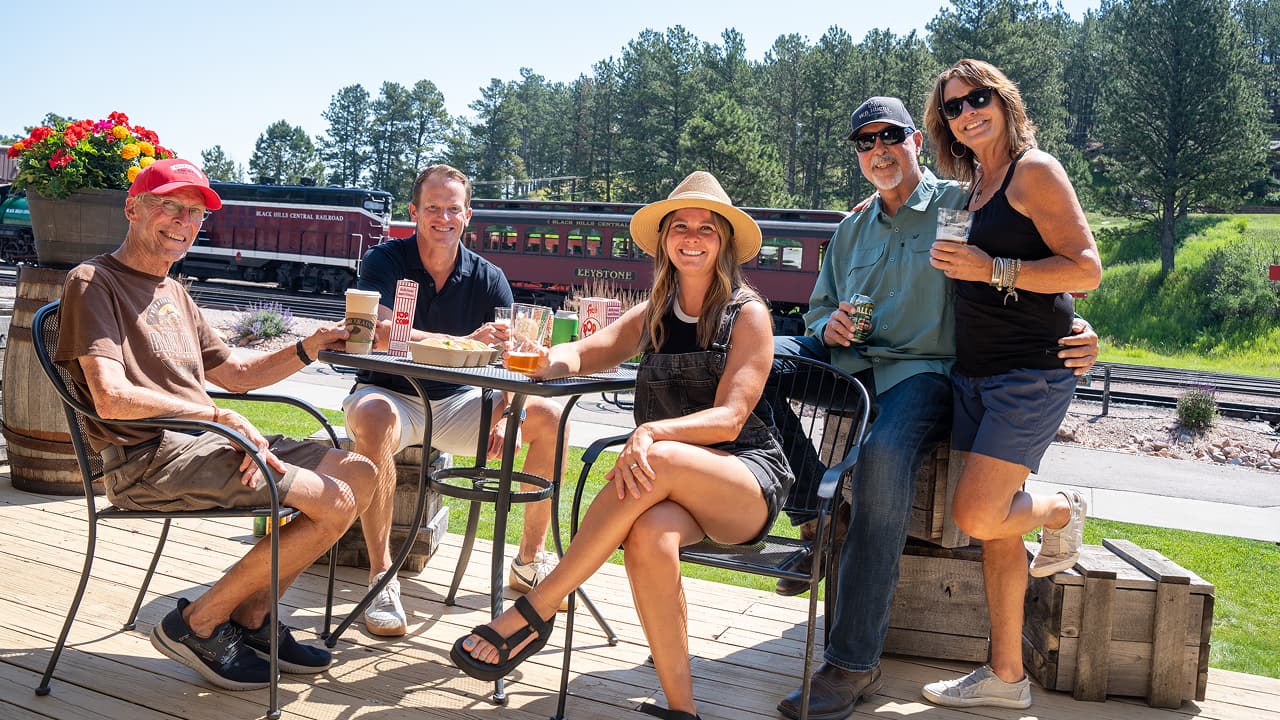
Our food service staff are there to provide a fresh made-meal from the High-Liner Eatery adjacent to our Hill City station—dine on the covered patio or take your meal on board the train. Look for a selection of freshly made made-in-house wraps, salads, sandwiches, and sweets at either depot. And we're committed to sourcing at least 50% of our food as organic or locally grown!
Train Attendants
Our train attendants work onboard the train from the High-Liner from Memorial Day to Labor Day to sell concessions and assist passengers onboard the train.
.svg)
Depot & Ticket Agents
Ticket agents reserve and sell train tickets and answer questions passengers may have. Souvenirs, food, and drinks are available in the depot before you ride. Rest room facilities are located at the depots but not on board the train.
.svg)
Maintenance Staff
Maintenance staff make sure the grounds and facilities are clean and in order. Tasks include collection of trash and recycling, lawn care, and small repairs.
Meet Chug the Bison
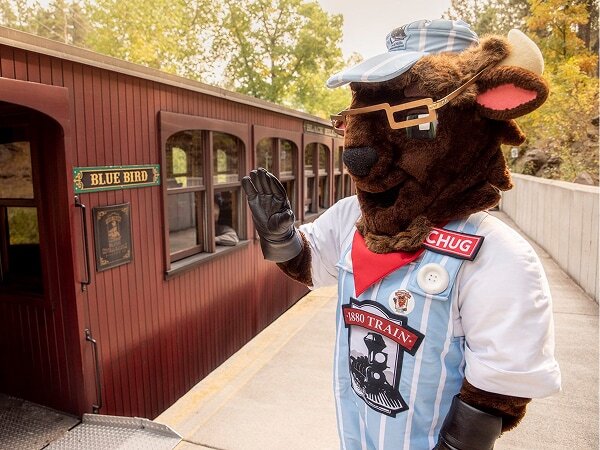
Chug is the 1880 Train’s bison mascot! He’s a railroad engineer who knows all about trains and safety, and loves to share fun facts about train history. He likes getting his picture taken, too! Don’t forget to say hello next time you visit Hill City or Keystone.