

The first steam engine in the Black Hills was brought across the prairie by bull team to the Homestake Mining Company at Lead, South Dakota in 1879. In 1881, the Homestake laid the first narrow-gauge railroad in the Black Hills to haul its cargo and the public from Lead to several mining camps. But after World War II, diesel locomotives took over due to their increased efficiency.
RESCUING HISTORY
William B. Heckman had a dream of starting a steam railroad for tourist trains where steam operated and was not just on display. He and Robert Freer, a diesel locomotive sales engineer with General Motors, partnered with others in 1956 with the same belief—that “there should be in operation at least one working steam railroad, for boys of all ages who share America’s fondness for the rapidly vanishing steam locomotive.” Heckman and Freer were quite familiar with the railroad community, they began promoting, fundraising and acquiring equipment quickly.
On the morning of August 18, 1957, the first official train operated on the Black Hills Central Railroad (BHC). The Klondike Casey pulled its two open-air coaches away from Burlington’s vintage Hill City depot, up the four-percent grade of Tin Mill Hill and on to Oblivion and back.
decline and rehabilitation
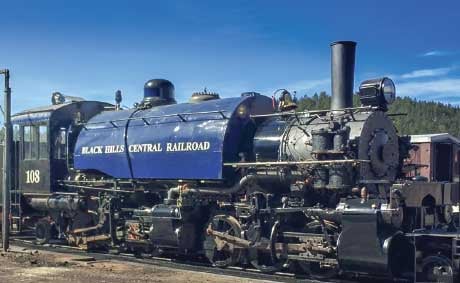
Even though the 1880 Train saw a boost of publicity in the 1970s thanks to its use in TV and film, the 1980s saw a decline in the service of the trains, and by 1990 Heckman sold the entire operation to Hill City residents Robert and Jo Anna Warder. Throughout the 90s the steam locomotives were restored to prime condition, as were several of the pieces of rolling stock. A new shop was added to the Hill City Engine House, so that staff could maintain and restore locomotives, passenger cars and other rolling stock on a year-round basis. Railroad facilities were cleaned up and upgraded to look like an authentic Black Hills steam railroading operation.
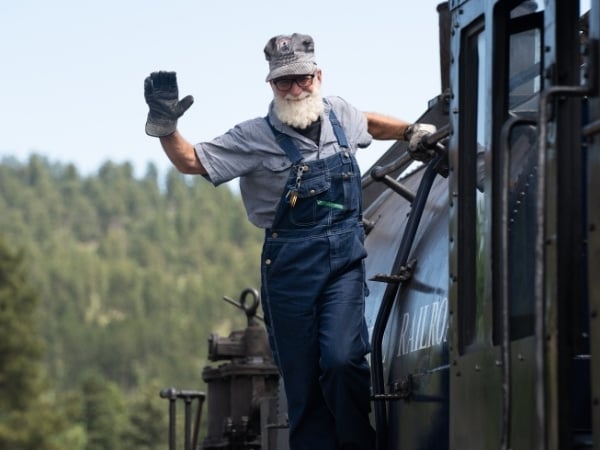
“These huge steel titans are running for future generations to enjoy, and now I get to help keep them running. That’s special to me.”
On May 17, 2001, steam locomotive #110 pulled out of Hill City with over 250 enthusiastic grade-school pupils, teachers and other passengers for the two-hour trip to Keystone and back. As Director of Railroad Operations, Mike Grimm puts it: “Since 1990, we’ve been given the resources to do what is near and dear to our hearts— restoring passenger cars and steam locomotives back to their historic look and feel.”
Preserving Living History
Every day through the summer, the crew fuels the engine, lubricates, inspects, washes and hauls 200 to 300 pounds of sand onto the engine, which is used for traction and to clean out the boiler flue. The work is demanding, but the reward is a safe, powerful engine capable of creating lasting memories for all on board. As one of our engineers, Marcus Myers, told The National Board BULLETIN (published by the National Board of Boiler and Pressure Vessel Inspectors), “These huge steel titans are running for future generations to enjoy, and now I get to help keep them running. That’s special to me.”
Every winter, the Engine House crew regularly inspects and repairs the locomotives’ suspension components, drivers (big wheels), brakes, pony trucks (little wheels) and rods. They also check bearings for excessive clearance and conduct an ultrasonic examination of crank pins, axles and rods to look for cracks.
As for the passenger cars, the crew replaces old, obsolete drawbars and couplers with more modern “off the shelf” equipment, paints the cars and repairs the window seals. To keep the historical nature of the cars pristine, they pull out the seats, re-stain and varnish the floors and then put the seats back in.
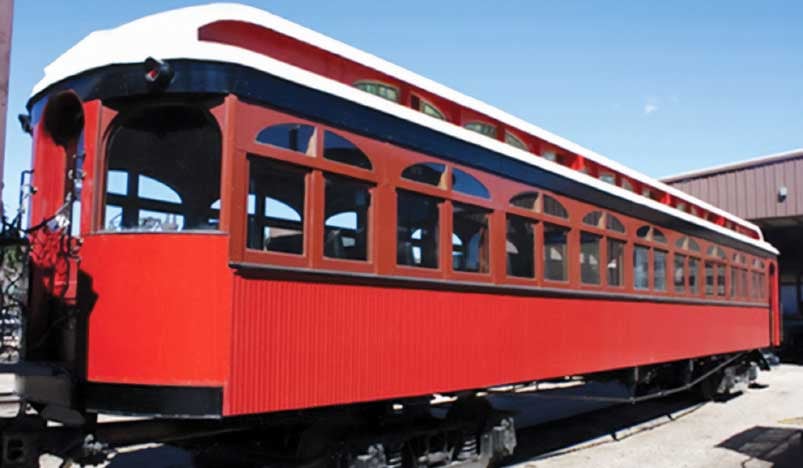
The 1880 Train also purchases and restores vintage engines and passenger cars back to their original condition. This is the Battle Creek before restoration:
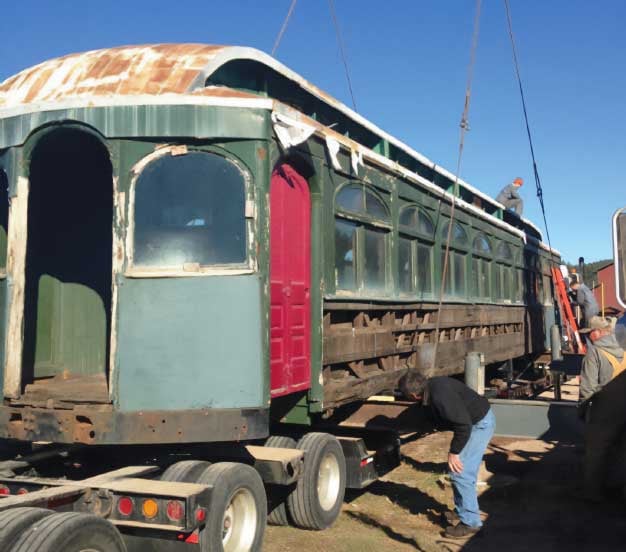
And this is the restored car!
During the season, there’s plenty of work to do as locomotives begin warming nearly four hours before departure. After each operating day, crews inspect every engine from the pilot to the cab, checking the suspension, bearings, fasteners, and running gear for heat, wear, or movement. Problems are repaired immediately rather than deferred. This maintenance, care, and repair work is all the more amazing because almost all the work is done in-house, making many of the steel parts needed and updating old, obsolete drawbars and couplers with more modern “off the shelf” equipment.
Want to see a part of history come alive and create memories that will last a lifetime? Be sure to book your journey on the 1880 Train today!